Showing posts with label Review. Show all posts

Sunday, December 2, 2018

Dylan at Work

More Blood, More Tracks is a revelation.

The limited edition boxed set invites us to  follow the evolution of a masterpiece — Blood on the Tracks — from the first tracks Dylan recorded with just his guitar and harmonica in New York to those he laid down with a rollicking band in Minneapolis three months later.

The six discs in this remarkable collection include, in chronological order, all 87 takes that have survived (82 from New York and five from Minneapolis).

Along the way we get to witness the many ways in which Dylan experimented with the pacing and phrasing of each song — the results often brilliant but in different ways.

The New York sessions ended in what everyone thought was a finished album — indeed copies were circulated to reviewers — but Dylan was having second thoughts. Rightly so, as it turned out. The five tracks from Minneapolis, essentially recorded live in the studio at the end of 1974, boost the energy level of the whole enterprise.

Without them, Blood on the Tracks would still be a great album, but not the masterpiece it became. 

The delay also gave Dylan time to further refine his lyrics. Consider, for example, "If You See Her, Say Hello."

In New York, he sings: "I knew it had to be that way. It was written in the cards. But the bitter taste still lingers on. It all came down so hard."

On the final version, he sings: "Whatever makes her happy, I won't stand in the way, though the bitter taste still lingers on from the night I tried to make her stay."

Much better, right?

Saturday, October 6, 2018

Rave on, James Frey

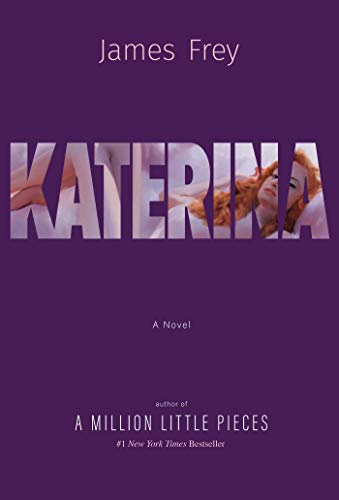
Katerina by [Frey, James]
I was hoping that Katerina would mark a return to form for James Frey, whose books had, in my estimation, gone steadily downhill since A Million Little Pieces. I started reading and I thought it was, wasn't, was, wasn't, was.

As I turned the pages, the narrator's bad-boy bravado quickly wore thin. Likewise his distain for ordinary workaday life and his burn-it-down posturing. Through it all, his insecurity and self-loathing came shining through. He couldn't hide it and didn't try.

Even as he worshiped excess, intensity, and passion, he yearned for peace. His grandiose ambitions belied his longing for domestic bliss.

Of course Katerina, a novel named for a woman, is at its core a love story. Both Frey and his narrator (who he pointedly intertwines) are romantics. But then so am I, and it's the love story that makes the book, despite its many glaring faults, worth reading.

I both loved and hated it.

Saturday, September 23, 2017

Refreshingly Unorthodox

The first review of my new novel, Then We'd Be Happy, is outstanding:

“A refreshingly unorthodox tale of the challenges facing modern, lower-middle-class 20-somethings.” 
— Kirkus Reviews

Preorder now from Amazon, Barnes & Noble, or IndieBound.

Saturday, November 26, 2016

Fasten Your Seatbelt

Greg Bardsley's new novel is a madcap race against time and conflicting priorities in California's go-go Silicon Valley—a raucous parody of the valley's twisted family and corporate values.

I'm telling you, this guy has style. And a wicked imagination. And nobody has more fun with a story than Greg does.


Tuesday, July 21, 2015

Blog Tour: The Possibility of Snow

The Possibility of Snow has been making the rounds. Here's what book bloggers are saying:

“In the end, you may feel both a sense of loss and peace, but also anger. Whatever your reaction to this work, it will be visceral.” 
— Naomi Leadbeater, Naimeless

“I loved the story and the way it was handled ... this was an honest, real, emotional and very well written book.” 
— Bri Wignall, NaturalBri

“The Possibility of Snow reminds us what it is like to develop a new relationship and all of the emotions involved. [It] keeps you turning the pages as Al Riske pushes the limits with the friendship of these two characters.” 
— Rachel Rennie, Rachel's Blog

“The author does a great job of showing the boundaries of new friendships and what happens when those boundaries are crossed.” 
— K.M. Hodge, In Review

“The ending blew me away! This book will challenge the way you think.”
— Avid book reader, Granny Loves to Read

Monday, October 20, 2014

A Moveable Feast

I've been reading the Additional Paris Sketches in the restored edition and the Forward and the Introduction by Hemingway's son and grandson, Patrick and Sean, respectively.

It's easy to see why the additional sketches were not included before. They're not very good. It's also easy to see why they are included now. They're still pretty interesting even if they're not very good. The really interesting part, though, is comparing edited stories with restored versions: what was gained or lost or regained.

Usually both versions are good in different ways and it's hard to say which is better.

The Fragments included at the end are quite sad, showing Hemingway's repeated attempts to write an introduction to the book. (The previously published introduction was apparently fabricated by Mary Hemingway, his wife at the time.) Though each attempt contains some spark, all in the end fail miserably.

Though people persist in referring to A Moveable Feast as a memoir, Hemingway clearly considered it a work of fiction, saying: "All remembrance of things past is fiction."

Perhaps it should go without saying that memoir is simply a genre of fiction.

Friday, September 27, 2013

Desire Lines

This album is magical. 
It reminds me of how I felt when my heart was new. 
Every track is a gem.
"Troublemaker" and "Do It Again" are especially infectious. 
Check it out. You won't be sorry.

Sunday, April 15, 2012

A River So Long

I just spent the weekend with a woman who travels a lot. Her name is Veronica and I tagged along as she hopscotched between Phoenix, Boston, New York, Memphis, New Orleans, Birmingham, and Raleigh.

We visited Jamaica a couple of times, too, but that was before.

Along the way I met her husband, her cousin, her colleagues, a couple of old boyfriends, and various strangers and oddballs.

I never did learn what Veronica does for a living but I know her job requires her to be on the road a lot.

I could only guess what she was thinking.

Veronica is the protagonist of Vallie Lynn Watson's unconventional debut novel, A River So Long.

It's a trip.

Get on board.

Sunday, April 8, 2012

The Sense of an Ending

Julian Barnes' short novel, The Sense of an Ending, is a fascinating mediation on perception, memory, and the nature of history.

It looks at how history is told and why it is retold, even when the history is our own. It shows us, through the late-life reflections of its narrator, why we must continually re-examine our understanding of events in the light of new evidence and unexpected revelations.

We may be surprised to learn that things were not as we thought they were, and we are not who we think we are.

Thursday, February 16, 2012

Unlikely Friends

I really like this part:

"Through all this emotional upheaval, Sabrina and Joshua become unlikely yet quite good friends. As you read, you become entangled in their lives, cringing when they miss an opportunity or make a bad emotional decision. You also find yourself—wrongly, guiltily, I know, but all the same—wanting these two to get together. They get each other in ways that no one else does. What if they were different ages? Would she wait for him?"
 — Laura Hamlett, Playback

Wednesday, February 1, 2012

Music to My Ears

"Al Riske has packed so much emotional punch in this 217-page slice-of-life novel [Sabrina's Window] that I'm still thinking about the people that inhabit the pages ... Reading it was much like hearing a piece of music. I know I'll read it again, and re-discover the nuances of something beautiful."
 — Katherine Adams, Goodreads

Thanks, Katherine!

Wednesday, January 11, 2012

First review of Sabrina's Window

Skipping to the part I like best ...

"Sabrina's Window is a pure pleasure to read. Al Riske does an excellent job of creating colorful, realistic characters. The story is brought to life while the author blends the story into the beautiful Taos scenery. Doing so gives the novel a very unique flavor and I highly recommend it."
 — Paige Lovitt, in the Seattle Post-Intelligencer

You can read the full review here. It's quite insightful, actually.

Saturday, December 10, 2011

Antiphony

Antiphony is, in many ways, an awe-inspiring novel. It was, I think, written in awe. Awe of science and reason. Awe of intuition and faith. Awe of the one and the many, unity and diversity. 

Writer Chris Katsaropoulos has a way of delving deeply into what seem like small moments–the whole novel takes place in just three or four days–and capturing all their nuances and vibrating tension.

Throughout Antiphony, the protagonist (a physicist researching string theory) experiences dreams and visions that fill pages the way a flash flood fills a ravine–a torrent of words flowing into the space between the margins and pressing onward to the next page and the next.

It makes me wonder how he did it.

Monday, June 6, 2011

Feeling Lucky

Here's a book I highly recommend: I'm Feeling Lucky, by Doug Edwards.

Billed as "The Confessions of Google Employee Number 59," the book is insightful and inspiring and down to earth all at once.

It's fun to see how the author, an old-school marketing pro, juggled pride and humility during his tenure with a company that tended to ignore conventional wisdom.

I felt like I was right there with him.

His blog, Xooglers, is also a riot.

Friday, April 1, 2011

Fifth Avenue, 5 A.M.

Fifth Avenue, 5 A.M., by Sam Wasson, is a little book with a lot to say.

The title tells you where and when shooting began on a silly-yet-pivital romantic comedy — the movie version of Breakfast at Tiffany's — and the book proceeds to put the whole production into the context of its time.

Think late-fifties, early sixties. The world was different then. I had forgotten how different.

What really interested me, though, was seeing how a story can be reimagined, and why this one had to be.

First of all, if you've never read Breakfast at Tiffany's, do it now. Go ahead. Go. The rest of this can wait and I don't want to spoil anything for you ...

It's stunning, don't you think, just how good Capote's comic tragedy really is. I just read it again and was astonished once more by how much feeling he was able to pack in so few pages.

But the novella — even though it provides most of the dialogue in the film and shows more than it tells — was not well suited for the screen. Not at the time.

In Fifth Avenue, 5 A.M., we learn that screenwriter George Axelrod struggled with the adaptation and nearly despaired. This wasn't the typical Hollywood romance where Rock Hudson tries to bed Doris Day and she holds him off until they're married.

The central character, Holly Golightly (Audrey Hepburn in the movie) is a Manhatten partygirl living off the largesse of rich old men. Virginity isn't an issue.

That was good because, we're told,  Axelrod had been itching to do a truly adult comedy. It was bad because he had the Motion Picture Production Code to worry about.

I watched the movie again last night and, while far from perfect, it is fascinating in its own right. Holly comes across as innocent compared to Paul, the male lead, who Axelrod reimagined as not just a struggling writer (as in the book) but one who prostitutes himself to a rich, older, married woman who leaves cash on the dresser when she leaves in the morning.

That was OK with Holly and with the censors and it all ends happily.

What I'd really like to see is a remake by the Coen Brothers.

Wednesday, February 24, 2010

The Glow in the Jar

Sky Sanchez, writing for the Sacramento Book Review:
"A dwelling teetering on the lip between dark and light, resignation and defiance, brokenness and unity; the short story, a world of possibilities within the confines of so few pages, and to capture them is to watch lightning bugs bump into the walls of a jar. What will the characters make of it? How will they get out? Al Riske has taken this form and made light in his collection, Precarious, not that he has made light of his characters, though. He has given them voices of volume, of life. Each story carries weight of its own, leading to the common denominator that we are all flawed. You will meet a man who loses what he needs in search of what he thinks he wants; a pastor who is shunned by those he preaches forgiveness to; and a man with a new set of eyes. Riske's stories reveal impulses and happiness, the search of and, sometimes, the consequences following. You will experience all of it through a keyhole, unnoticed, but aching all the same for these that live it. Riske uses words to bring us closer to the glow in the jar."

Monday, February 8, 2010

'Enthusiastically Recommended'

Midwest Book Review says:
"The literary art and tradition of the short story is alive and well in Precarious: Stories Of Love, Sex, And Misunderstanding, by Al Riske. This collection of fifteen short stories ranges from tales set in Seattle during the rainy season to California during an extended drought. From a Cape Cod vacation cabin to a get-a-way island. These are deftly written stories that not only entertain, but engender reflection long after they are finished and Precarious is placed back upon the shelf. It should be noted that one of these unique tales, "Pray for Rain," won the 2008 Blue Mesa Review prize for fiction. Precarious is enthusiastically recommended reading for anyone who appreciates the literary artistry of the short story format and an ideal addition for community library fiction collections."

Thursday, May 22, 2008

A Million Little Facts

I'm still reading James Frey's new book, Bright Shiny Morning — 150 pages to go.

What keeps me going is I've always found Los Angeles fascinating, as a place and as a symbol.

The book is about L.A.

L.A. is the main character.

L.A. is the only thing holding the narrative together.

There's just enough there to keep me going, but I can't say I'd recommend the book to anyone. Unless Frey manages to pull everything together at the end. Which I still hope he can do. But I doubt it.

At times I've been tempted to throw the book through a window or tear it into a million little pieces, a million little pieces. The writing is that bad. Sometimes. Sometimes it's brilliant though. Sometimes it really works.

The book got a great review in the New York Times. Said Frey redeemed himself.

Good, I thought.

I had been waiting for Frey to come out with a novel, not a phony memoir like A Million Little Pieces (which I loved and later hated because it was all a lie).

Oddly, the book doesn't say "A Novel" on the cover or anywhere else. There's just the title and the author's name and that page at the beginning that says:

"Nothing about this book should be considered accurate or reliable."

Nice touch.

Then, between each chapter, you're treated to a historical anecdote. And whole chapters are devoted to fun facts and not fun facts about L.A. There are chapters about the highway system, about the neighborhoods, about the rockers, surfers, slaves, and stars who make up the City of Dreams.

Characters come and go and a few of them come back but not as many as you would think.

The irony is that this work of fiction has more facts in it than Frey's so-called memoir.

Not that I can vouch for their accuracy.